


The Department of Agad Tantra evum Vyavahara Ayurveda is dedicated to the study of Ayurvedic Toxicology,
Medical Jurisprudence, and Forensic Medicine. The department provides comprehensive knowledge of natural
and artificial poisons, toxicology, medico-legal responsibilities, forensic principles, and emergency management
of poisoning.
Students are trained to integrate classical Ayurvedic concepts of Visha Chikitsa (Toxicology) with contemporary
forensic sciences, enabling them to recognize, prevent, diagnose, and manage poisoning while understanding
the ethical and legal responsibilities of medical practice.
To develop competent Ayurvedic physicians with sound knowledge of toxicology, forensic medicine, medical ethics, and medico-legal practice for safe and responsible healthcare delivery.
To provide comprehensive education in Ayurvedic Toxicology and Medical Jurisprudence.
To integrate classical Agad Tantra with modern forensic sciences.
To develop ethical, legal, and professional competence among future physicians.
To promote research and awareness in toxicology and poison management.
To prepare students for effective medico-legal practice
Understand the principles of Agad Tantra and Vyavahara Ayurveda.
Identify and manage poisoning caused by plants, animals, chemicals, and Minerals.
Develop knowledge of medico-legal procedures and forensic medicine.
Understand medical ethics and legal responsibilities of healthcare professionals.
Promote community awareness regarding poison prevention.
Bachelor of Ayurvedic Medicine and Surgery (BAMS)
Subject: Agad Tantra evum Vyavahara Ayurveda (Second Professional BAMS – NCISM Curriculum)
Ayurvedic Toxicology (Visha Vigyana)
Medical Jurisprudence
Forensic Medicine
Snake Bite and Animal Poisoning
Plant and Chemical Toxicology
Food Poisoning and Environmental Toxicology
Medico-Legal Procedures
Medical Ethics and Professional Conduct
Interactive classroom lectures
Case-based learning and clinical discussions
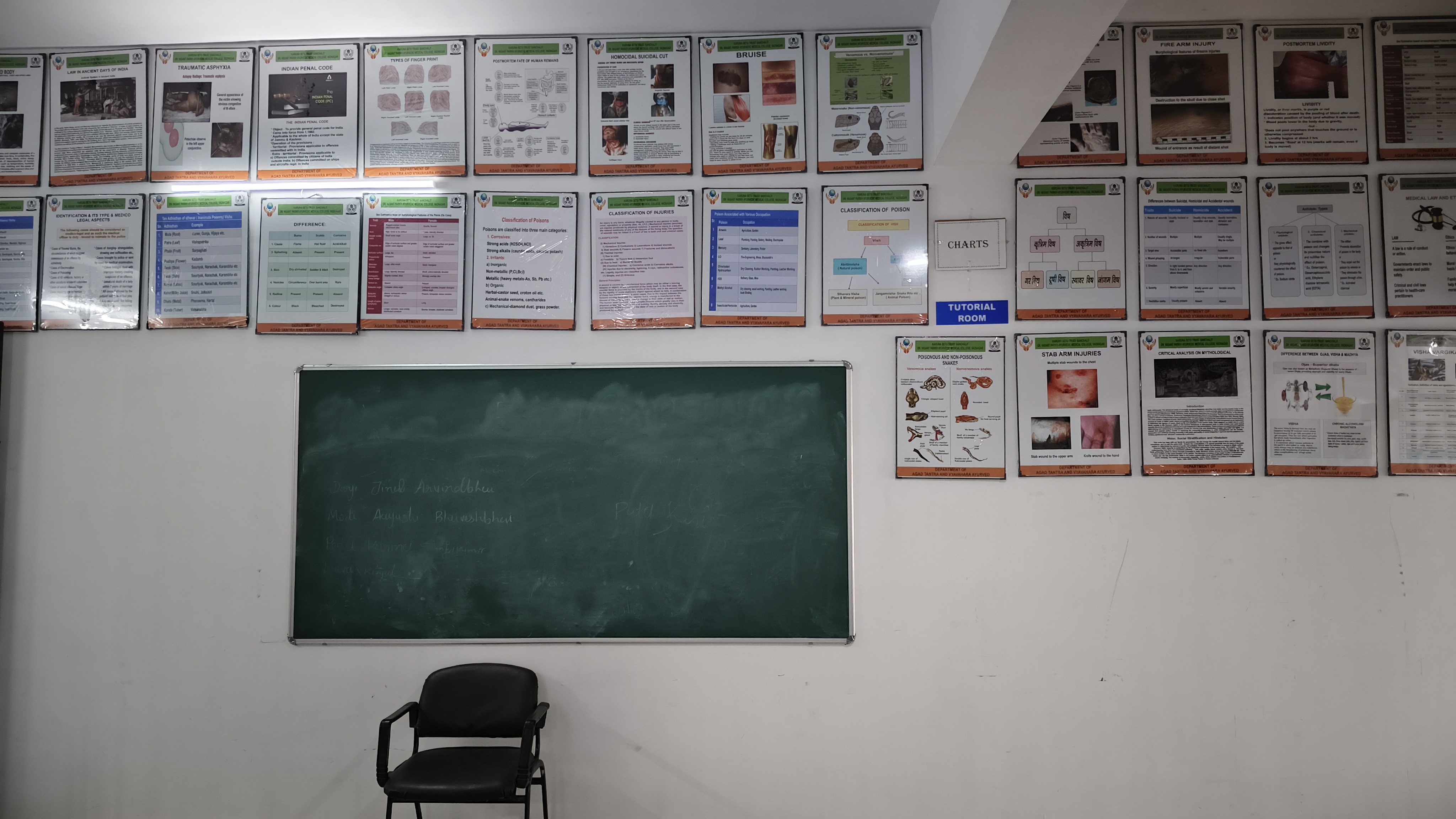
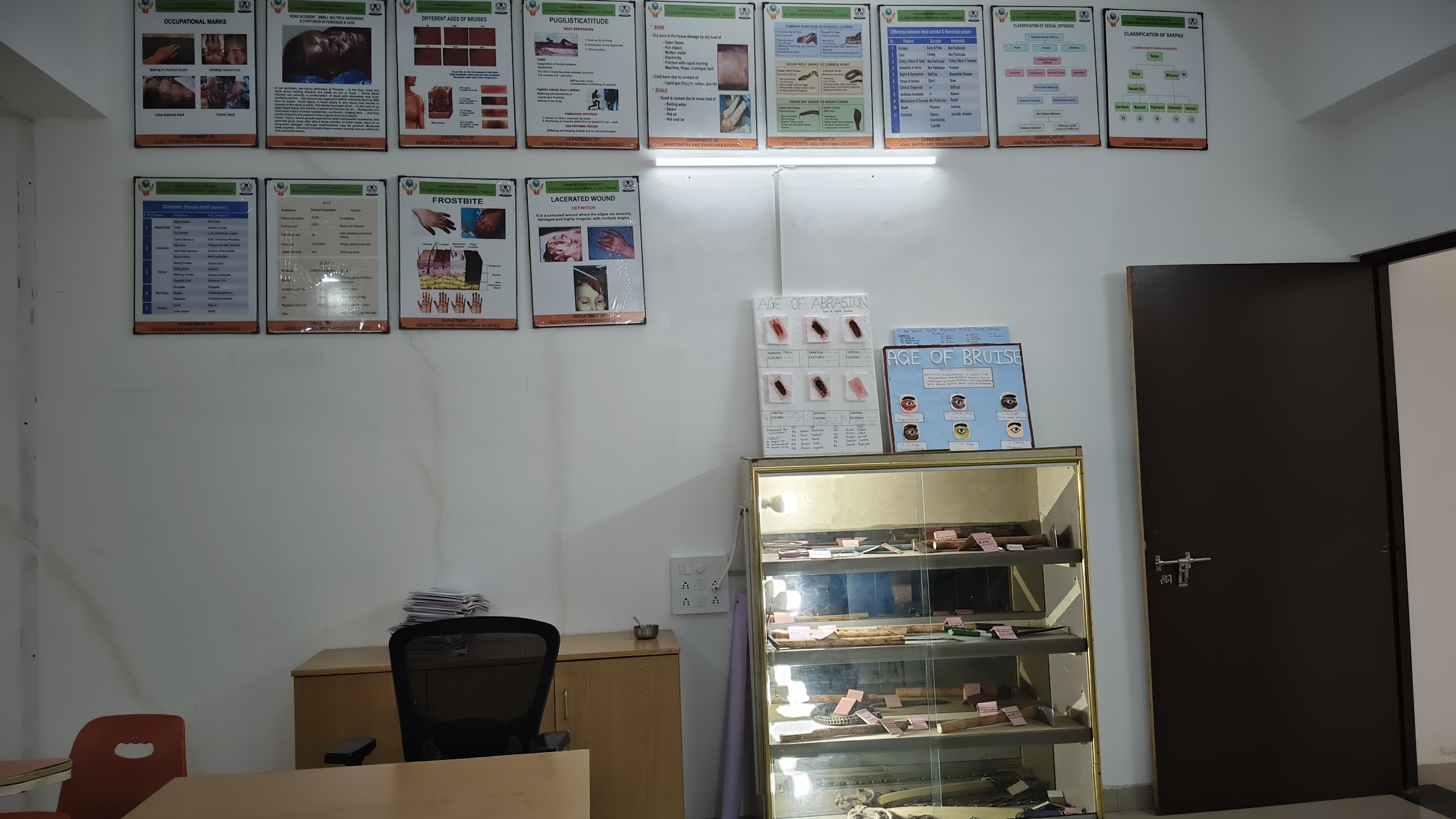
Demonstration using charts, specimens, and audiovisual aids
Practical sessions in forensic medicine
Field visits to forensic laboratories and healthcare institutions
Student seminars, tutorials, and continuous assessment
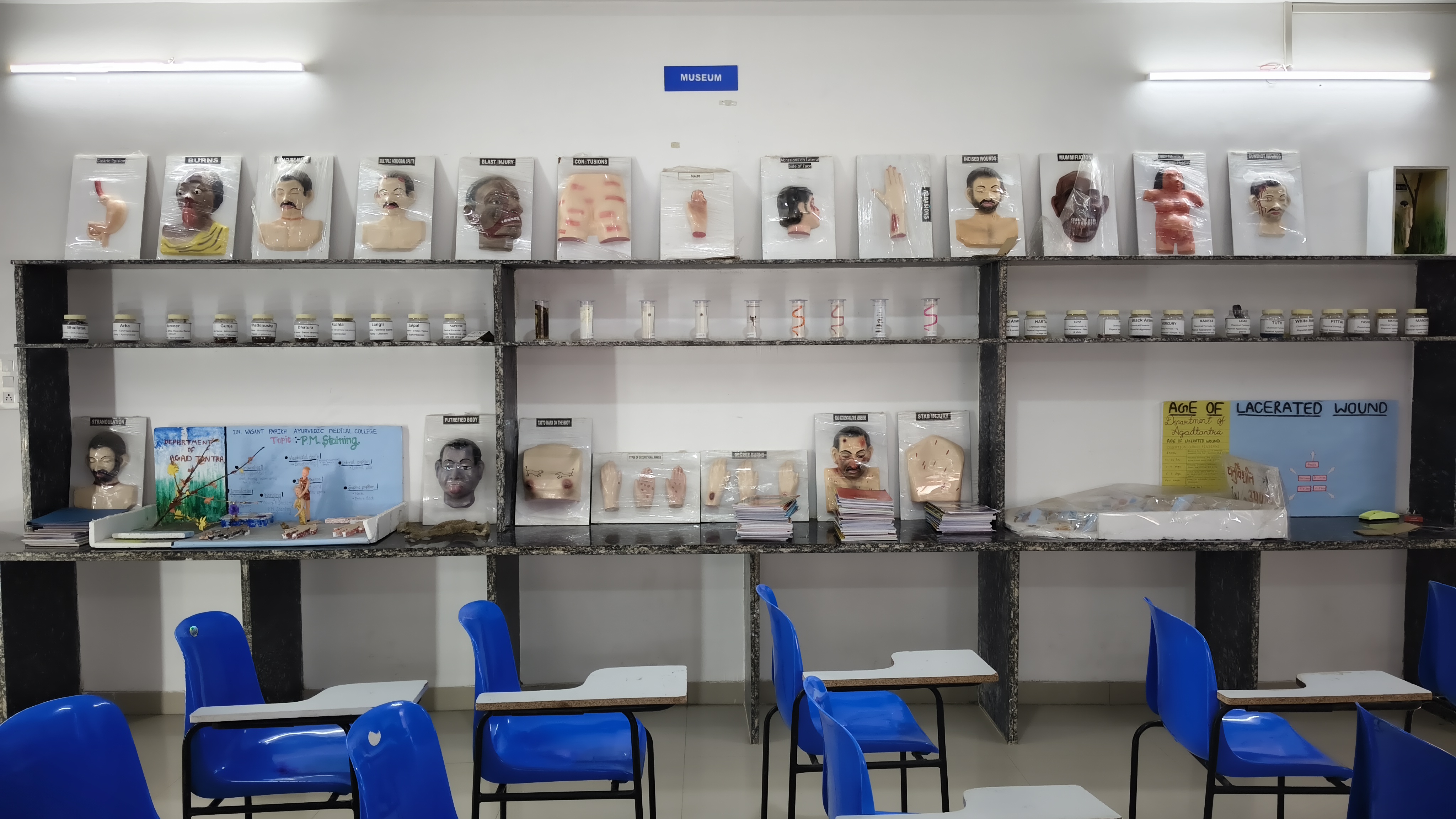
Well-equipped Departmental Museum with toxicological specimens
Departmental Library with Ayurvedic and forensic reference books
Teaching models, preserved specimens, charts, and demonstration materials
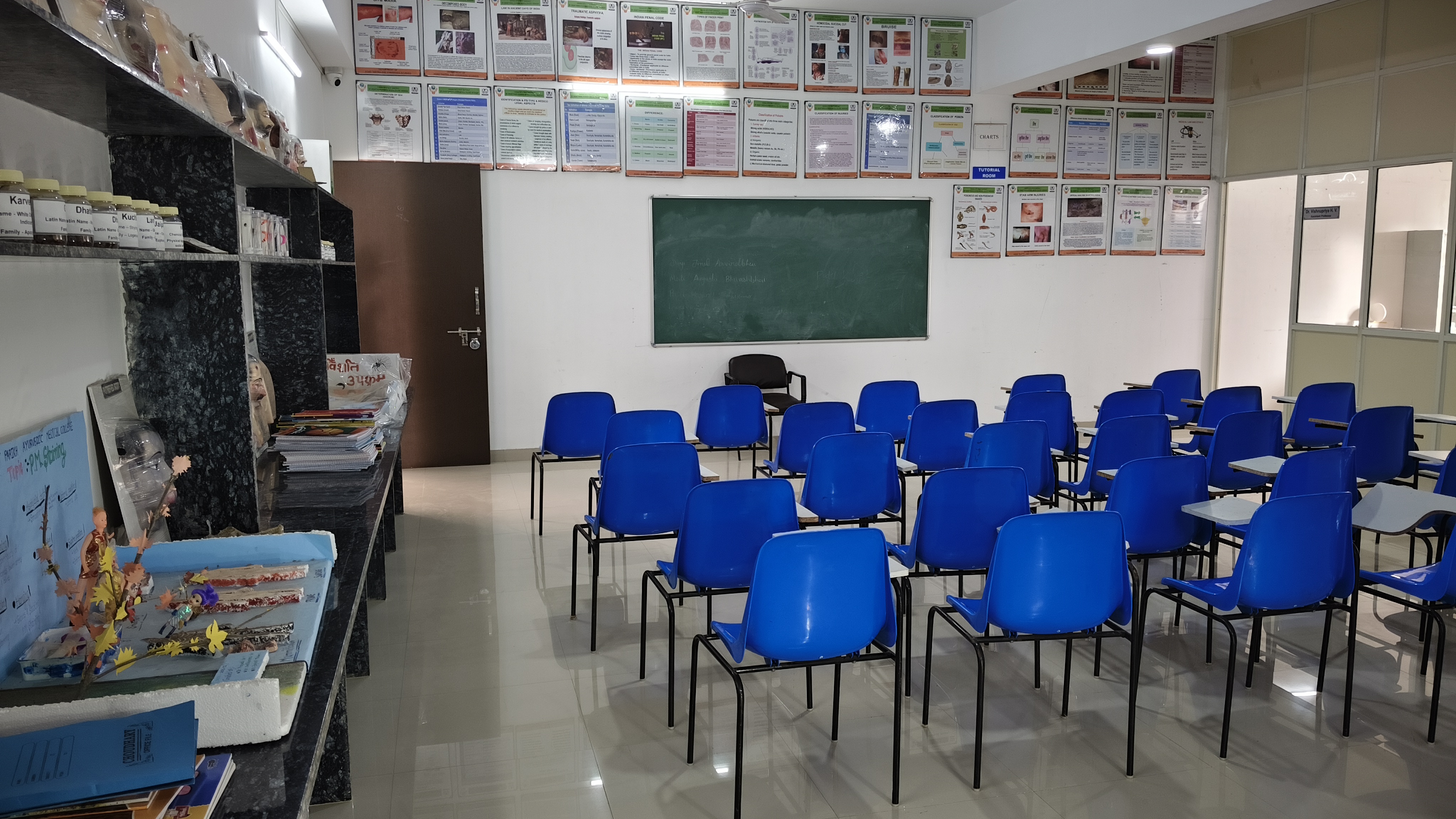
Audio-visual teaching facilities
Computer and internet-enabled learning resources
Educational visits to forensic laboratories, courts, hospitals, and post-mortem facilities
Infrastructure developed as per NCISM norms
Toxicology practical demonstrations
Medico-legal case discussions
Student seminars and journal presentations
Workshops on medical ethics and legal responsibilities
Educational visits to forensic science laboratories and hospitals
Awareness programmes on poison prevention.
Upon completion of the course, students will be able to:
Recognize and manage common poisoning emergencies.
Apply Ayurvedic and modern principles of toxicology in clinical practice.
Perform medico-legal documentation responsibly.
Understand forensic procedures and legal aspects of medical practice.
Practice medicine with ethical, legal, and professional accountability.
Knowledge of Agad Tantra equips graduates for careers in clinical toxicology, emergency medicine, forensic medicine, medico-legal services, public health, academia, research, poison information services, and healthcare administration. It also strengthens clinical decision-making and legal awareness in everyday medical practice.
Integrated teaching of Ayurvedic Toxicology and Forensic Medicine
Well-equipped museum with toxicological specimens
Medico-legal and forensic learning resources
Educational visits to forensic laboratories, hospitals, and courts
Experienced faculty with clinical and academic expertise
Case-based learning and practical exposure
NCISM-compliant teaching infrastructure