
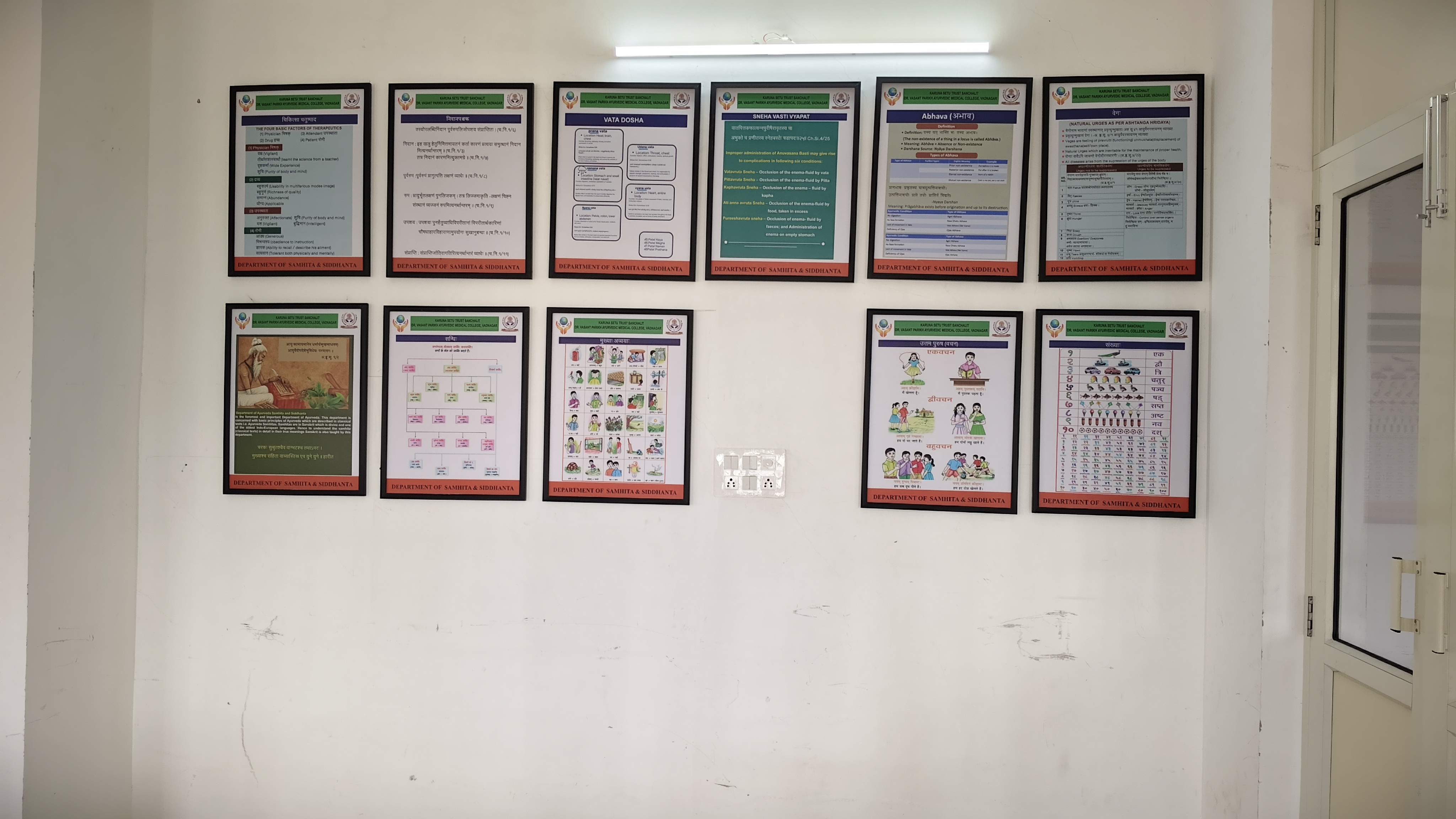
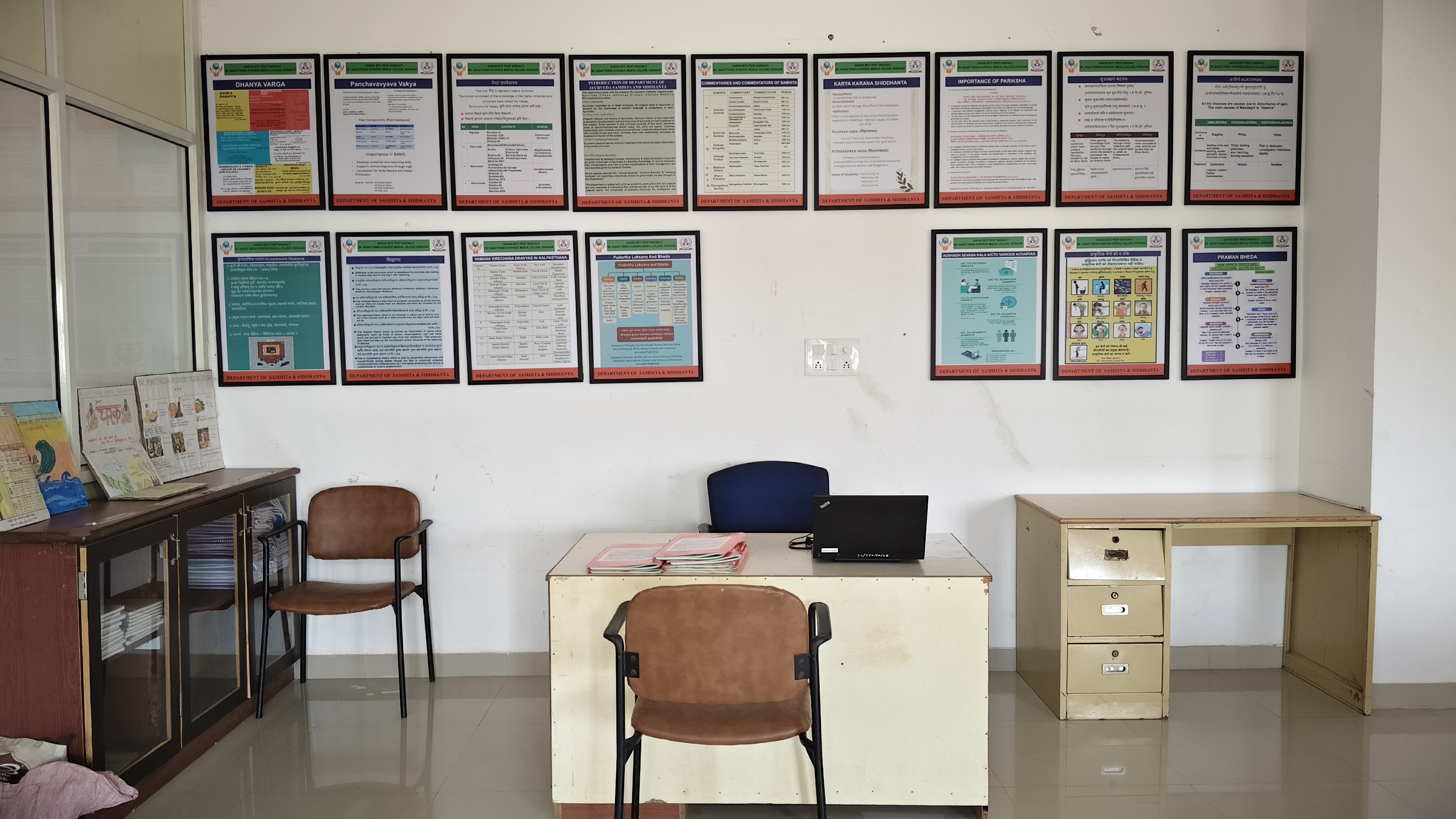
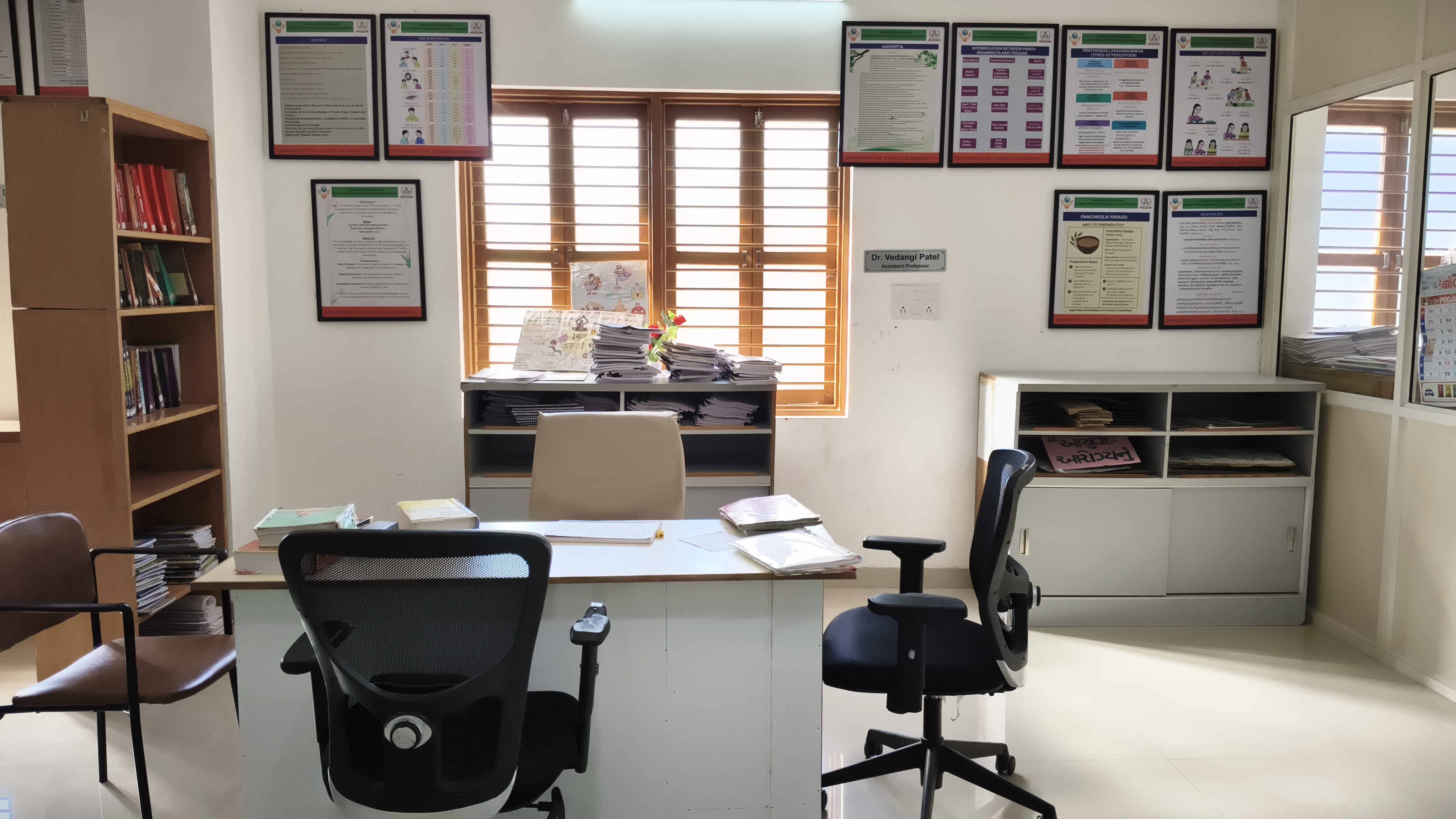
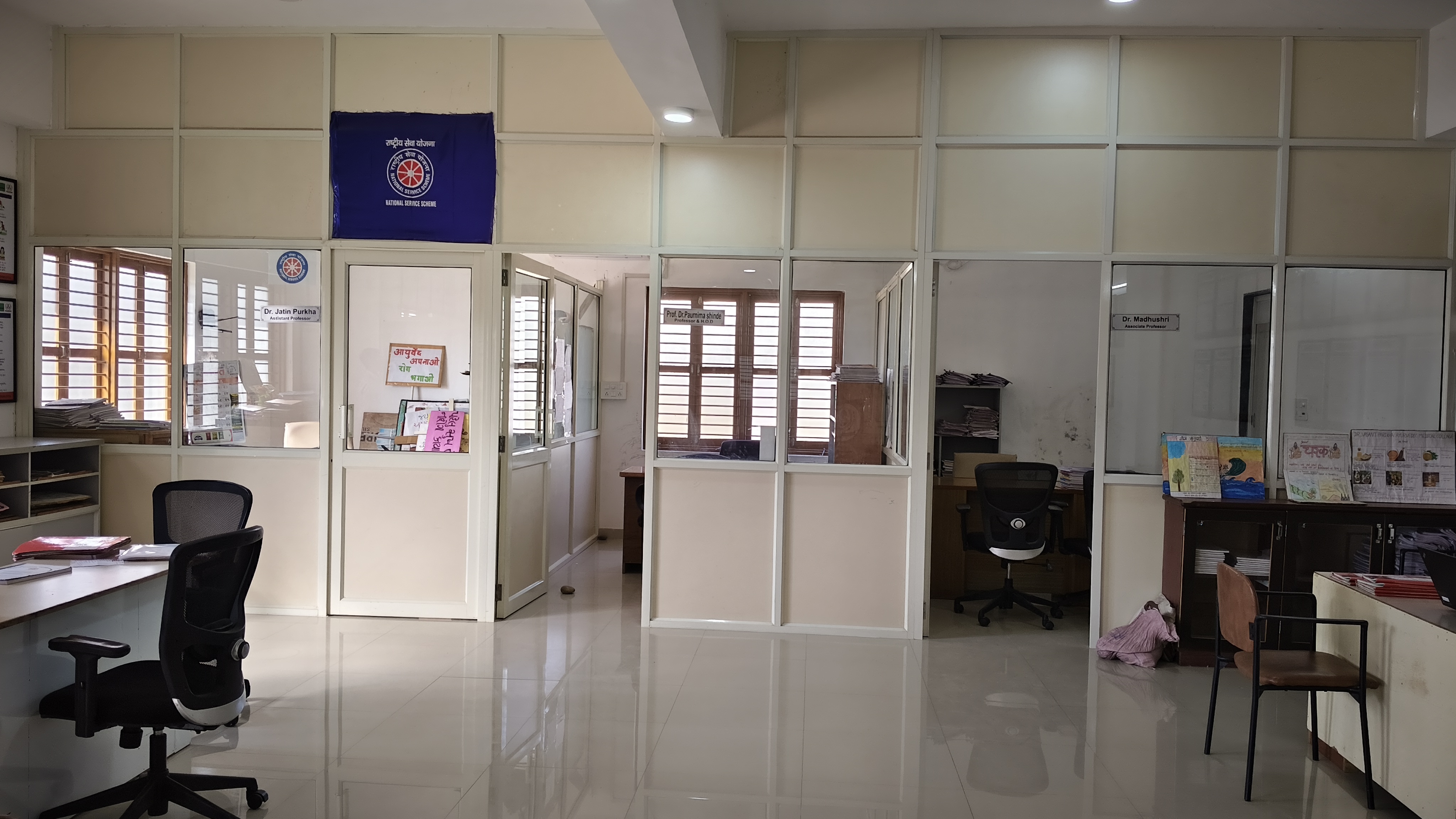
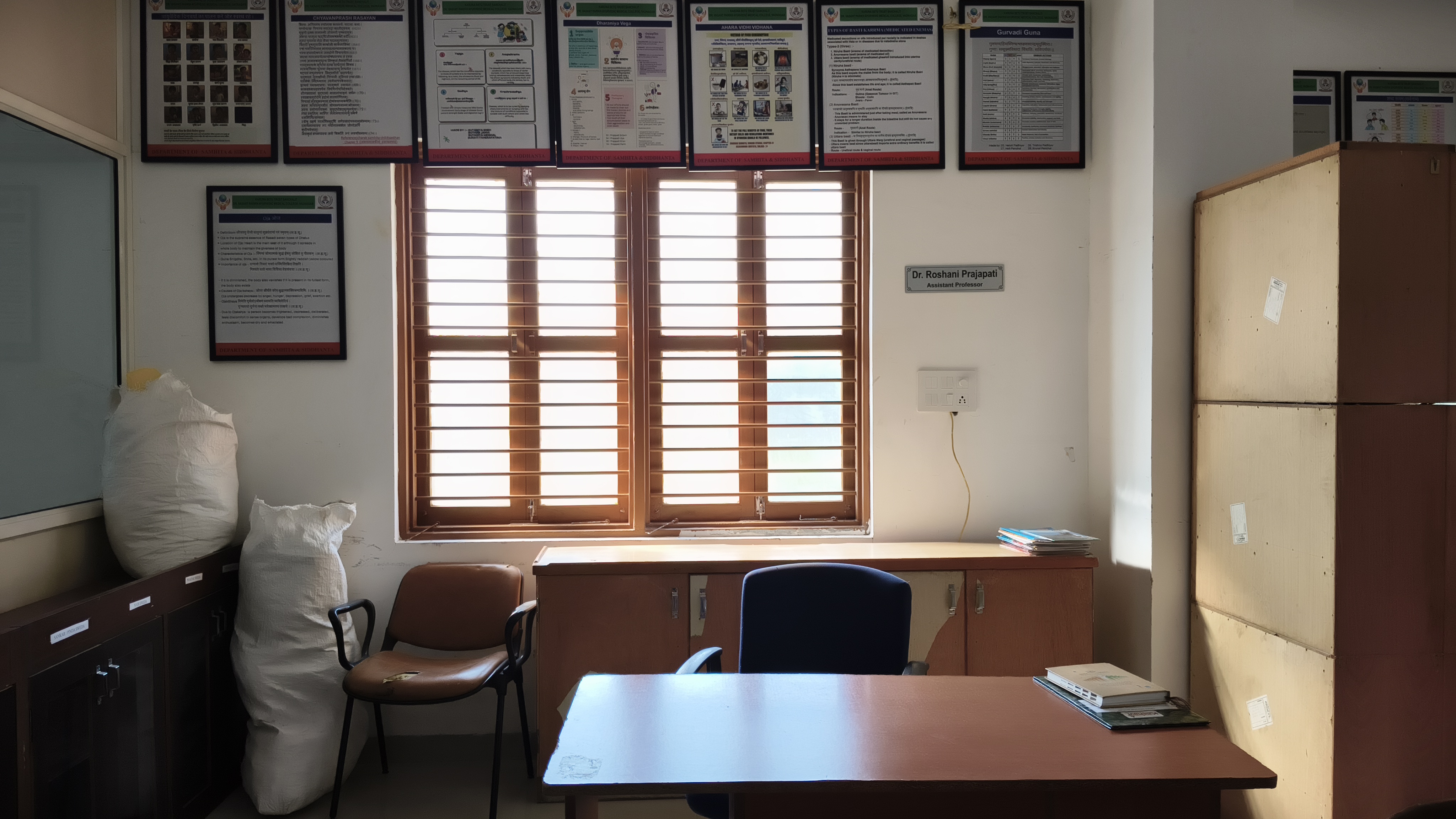
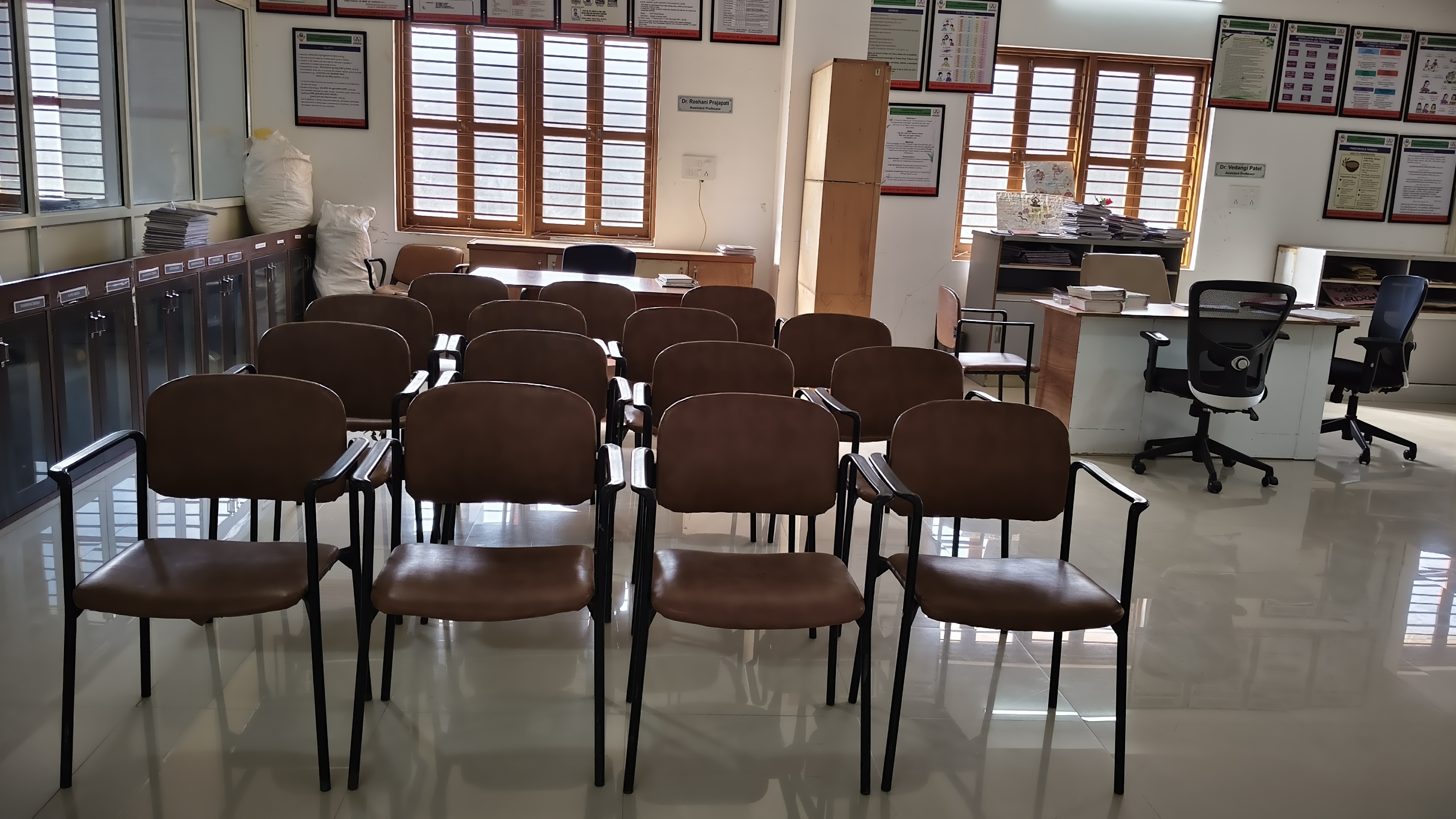
The Department of Ayurveda Samhita & Siddhanta forms the academic foundation of Ayurvedic education by imparting knowledge of the fundamental principles, philosophies, and classical texts of Ayurveda. Students study the teachings of Charaka Samhita, Sushruta Samhita, Ashtanga Hridaya, and other authoritative texts while developing a deep understanding of Ayurvedic concepts that guide diagnosis, treatment, ethics, and clinical practice.
To preserve, promote, and advance the authentic wisdom of Ayurveda through excellence in classical education, research, and scholarly interpretation.
To impart comprehensive knowledge of Ayurvedic classical literature.
To develop a strong foundation in Ayurvedic philosophy and Siddhanta.
To correlate ancient principles with contemporary healthcare.
To encourage critical thinking, research, and scholarly excellence.
To nurture ethically responsible Ayurvedic physicians.
To develop a clear understanding of the fundamental principles of Ayurveda.
To cultivate the ability to interpret classical Ayurvedic texts accurately.
To integrate classical concepts with modern scientific perspectives.
To establish a strong theoretical foundation for all clinical disciplines.
Study the principles described in Charaka Samhita, Sushruta Samhita, and Ashtanga Hridaya.
Understand Padartha Vigyan, Tattva, Tridosha, Panchamahabhuta, and fundamental Ayurvedic concepts.
Develop skills in interpreting classical Sanskrit texts.
Correlate Ayurvedic philosophy with modern medical understanding.
Encourage research and academic excellence in classical Ayurveda.
Bachelor of Ayurvedic Medicine and Surgery (BAMS)
Subjects: Ayurveda Samhita & Siddhanta (NCISM Curriculum)
Charaka Samhita
Sushruta Samhita
Ashtanga Hridaya
Padartha Vigyan
Maulik Siddhanta
Ayurveda Itihasa
Sanskrit for Ayurveda
Tridosha Siddhanta
Panchamahabhuta Siddhanta
Ayurvedic Philosophy
Classical text-based teaching
Shloka recitation and interpretation
Interactive lectures
Group discussions
Tutorials and seminars
Audio-visual learning
Student presentations
Journal discussions and academic activities
Departmental Library
Collection of classical Ayurvedic texts
Digital learning resources
Audio-visual teaching facilities
Seminar hall
Smart classroom facilities
Computer and internet-enabled learning resources
Infrastructure developed as per NCISM norms
Shloka recitation sessions
Classical text discussions
Student seminars
Journal clubs
Sanskrit workshops
Quiz competitions
Research presentations
Internal assessments and viva voce
Upon completion of the course, students will be able to:
Interpret classical Ayurvedic literature with confidence.
Apply Ayurvedic principles in clinical reasoning.
Correlate classical philosophy with modern healthcare.
Develop analytical and research skills.
Build a strong theoretical foundation for all clinical disciplines
The department prepares students for careers in clinical practice, postgraduate education, teaching, Ayurvedic research, academic writing, manuscript interpretation, healthcare policy, and evidence-based Ayurveda.
Strong emphasis on classical Ayurvedic education
Comprehensive study of Charaka and Ashtanga Hridaya
Sanskrit-integrated learning
Research-oriented academic environment
Interactive and discussion-based teaching
Experienced faculty with expertise in Ayurvedic philosophy
NCISM-compliant academic infrastructure