
The Department of Kriya Sharir is dedicated to the study of human physiology from the Ayurvedic perspective
while correlating it with modern physiological sciences. It enables students to understand the normal functions
of the human body through the concepts of Dosha, Dhatu, Mala, Agni, Srotas, Indriya, and Manas, forming a
strong foundation for clinical diagnosis and therapeutic decision-making.
The department combines classical Ayurvedic knowledge with contemporary scientific understanding to help
students appreciate the physiological basis of health, disease prevention, and holistic patient care
To become a centre of excellence in Ayurvedic physiology education by integrating classical Ayurvedic principles with modern physiological sciences and fostering academic excellence, research, and clinical competence.
To impart comprehensive knowledge of Kriya Sharir based on classical Ayurvedic texts.
To correlate Ayurvedic physiology with modern physiological concepts.
To develop analytical thinking and scientific temperament among students.
To promote research, innovation, and evidence-based learning.
To prepare competent Ayurvedic physicians with a strong physiological foundation.
Develop a clear understanding of normal physiological functions according to Ayurveda.
Explain the concepts of Dosha, Dhatu, Mala, Agni, Srotas, and Prakriti.
Correlate Ayurvedic physiology with contemporary medical science.
Strengthen students' clinical reasoning and diagnostic abilities.
Provide practical laboratory exposure aligned with NCISM guidelines.
Bachelor of Ayurvedic Medicine and Surgery (BAMS)
Subject: Kriya Sharir (First Professional BAMS – NCISM Curriculum)
Tridosha Siddhanta and Dosha Kriya
Agni, Ahara Parinama and Metabolism
Dhatu and Mala Physiology
Srotas Sharir
Indriya and Manas Sharir
Prakriti and Constitutional Assessment
Basic Modern Physiology and its Ayurvedic Correlation
Classical text-based teaching with Shloka interpretation
Interactive lectures and case-based discussions
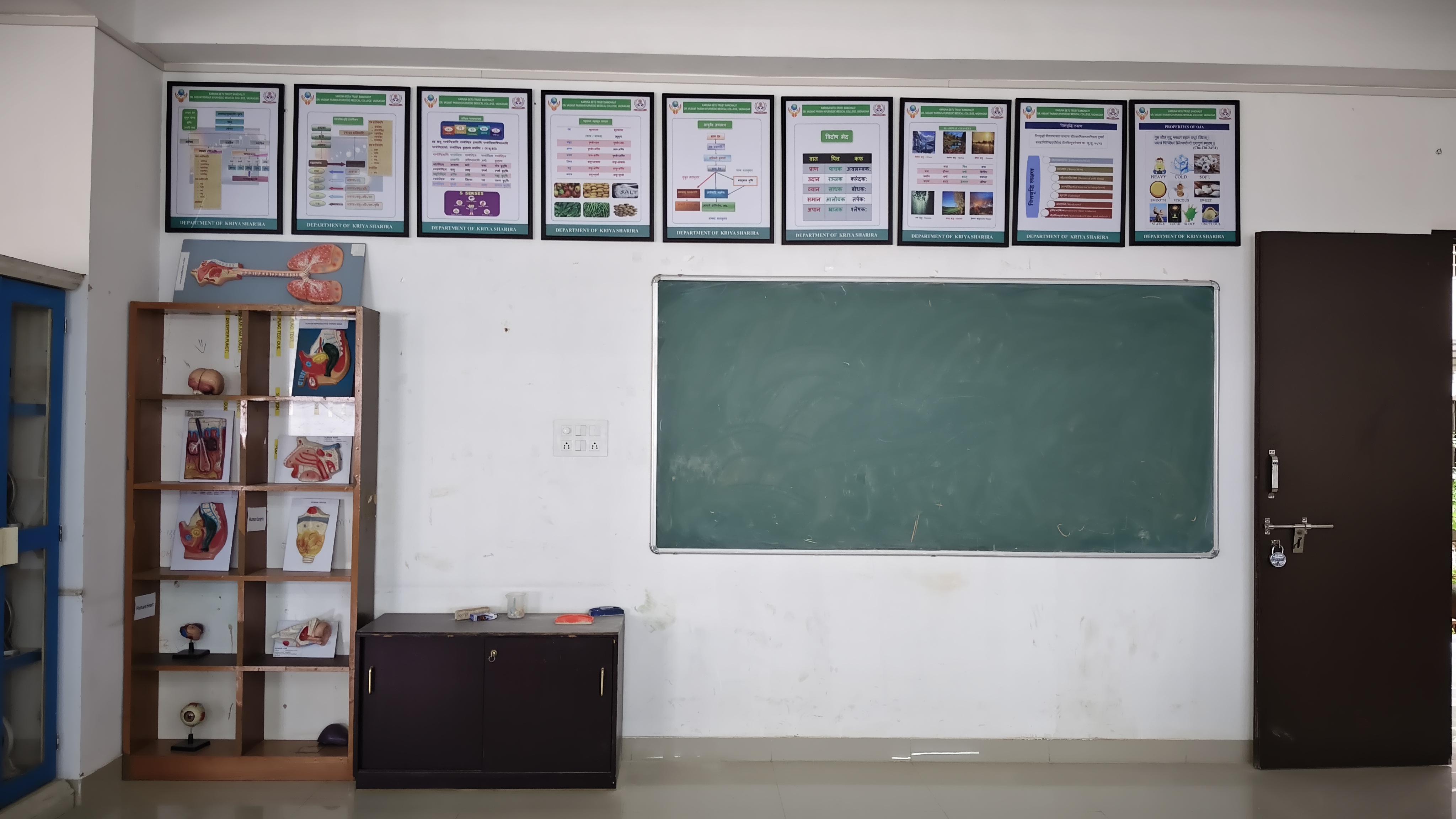
Demonstration using charts, models, and audiovisual aids
Practical laboratory sessions and experiments
Integrated teaching with modern physiology
Student seminars, tutorials, and continuous assessment
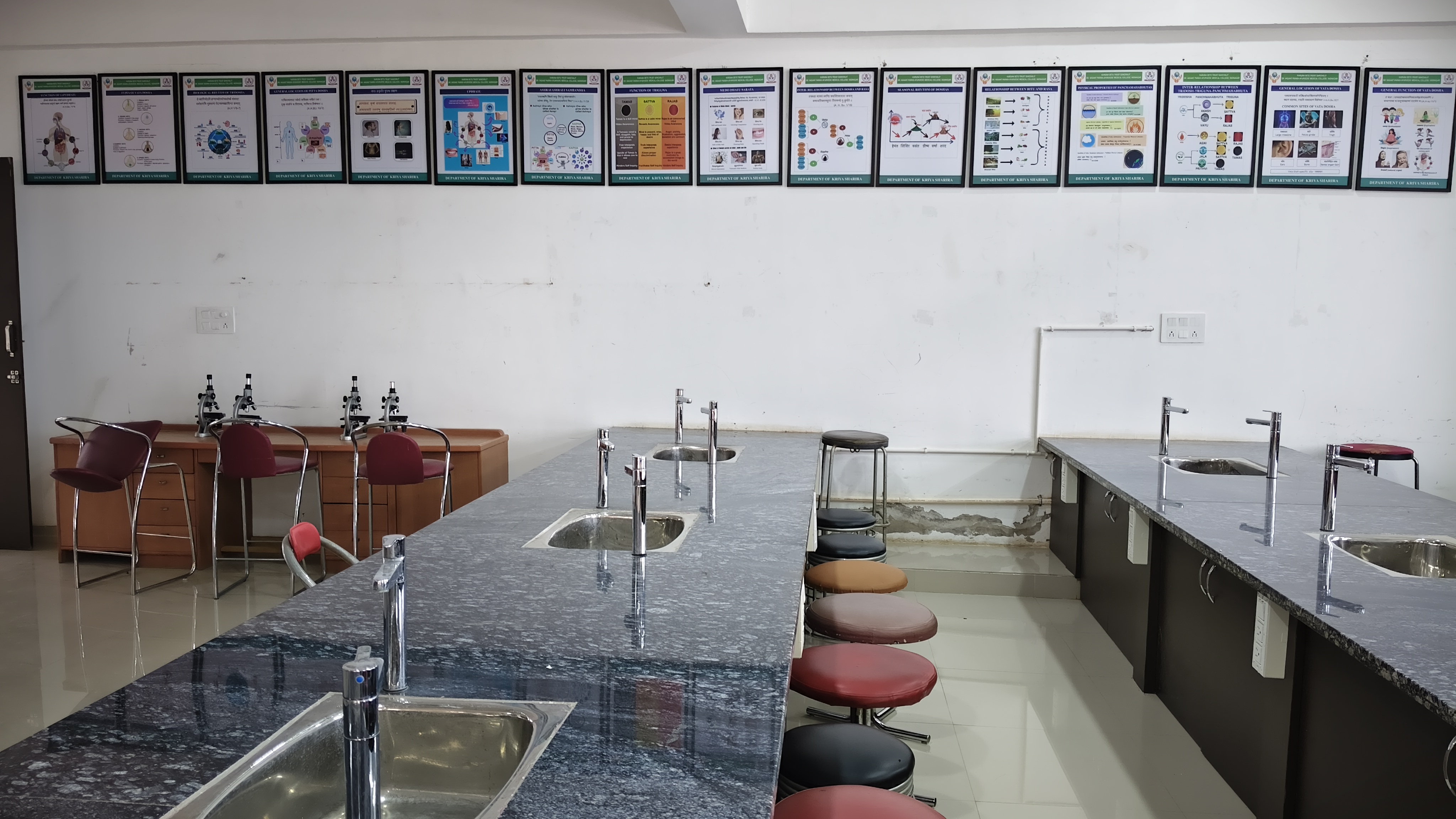
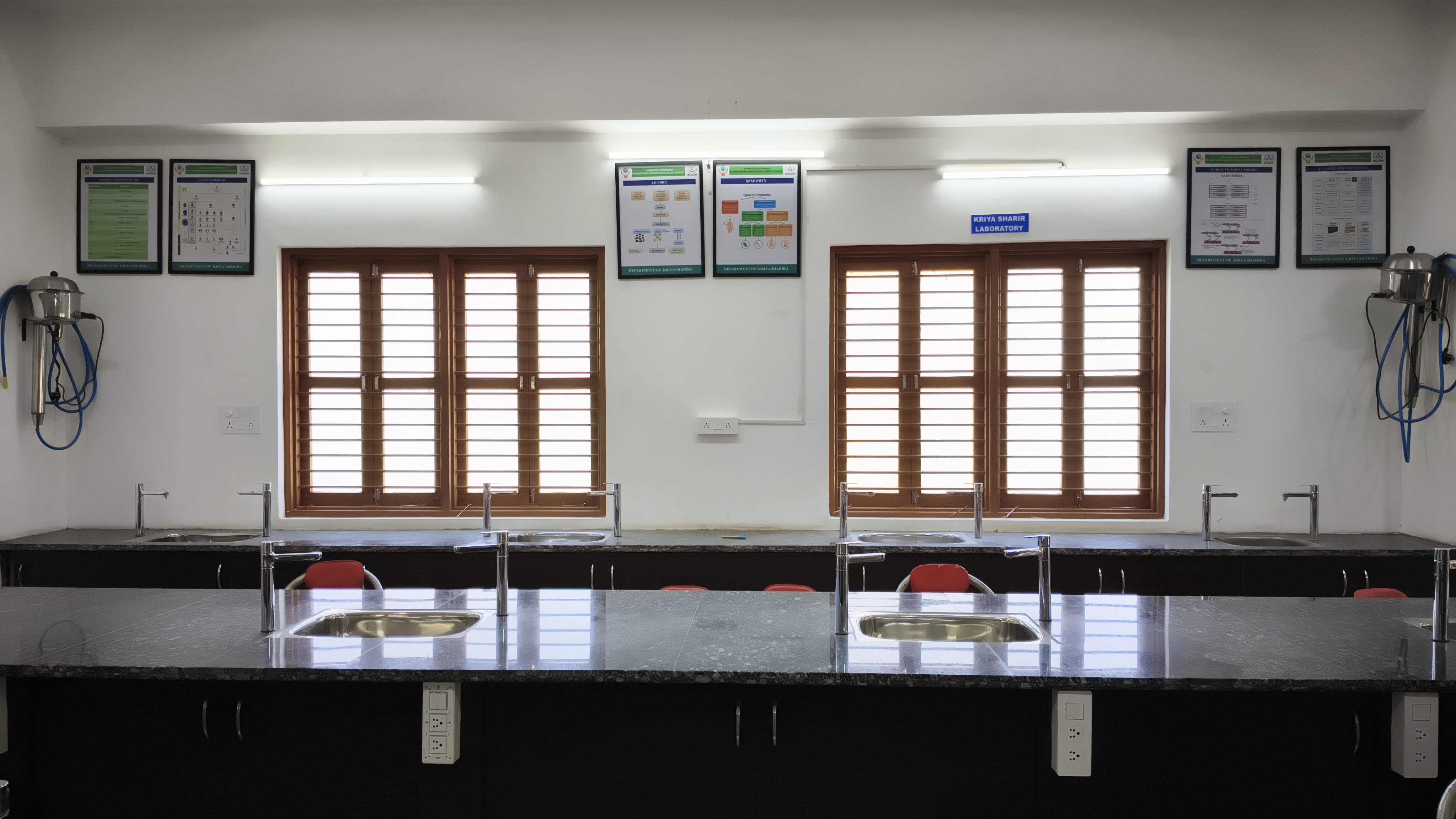
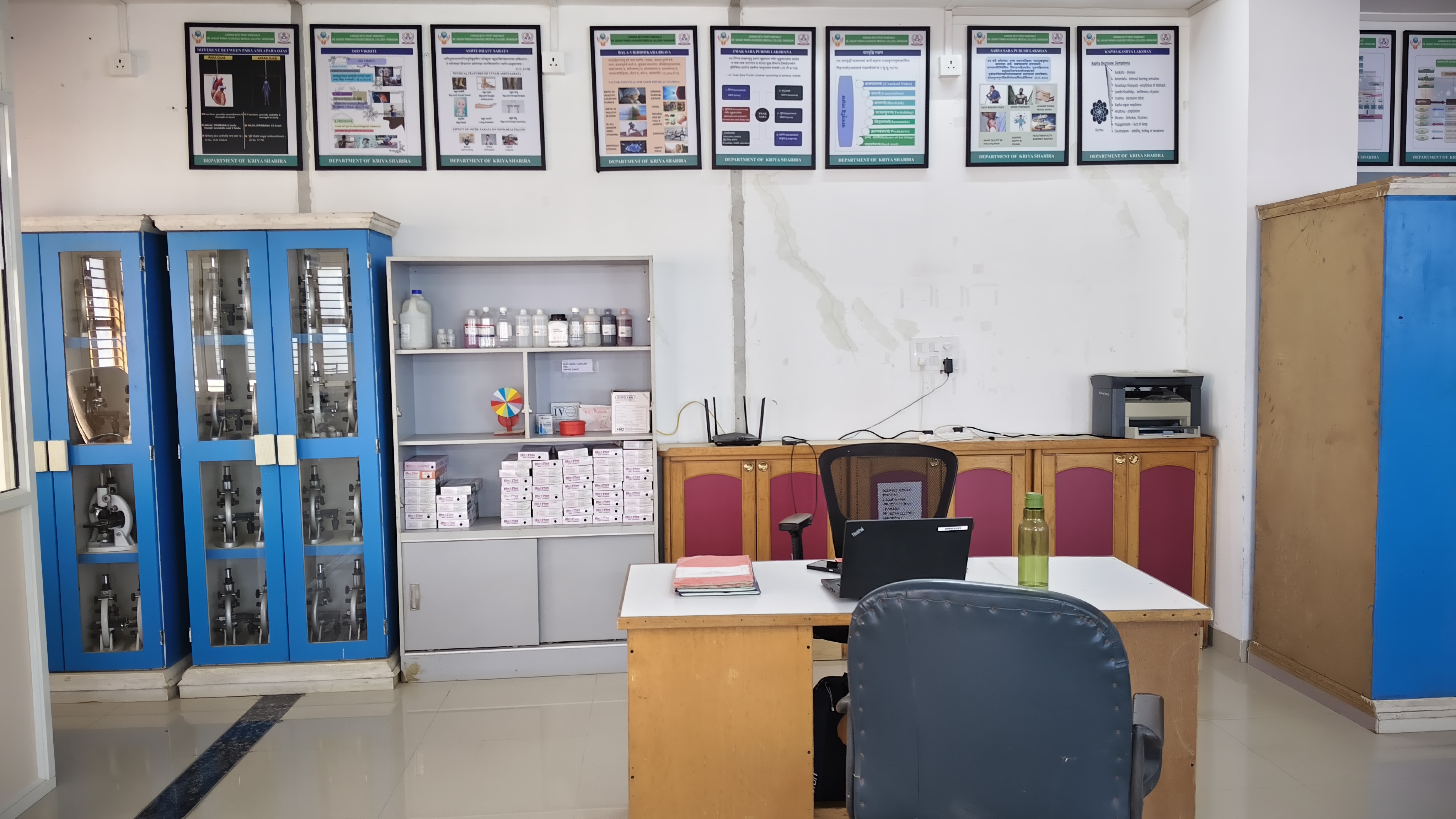
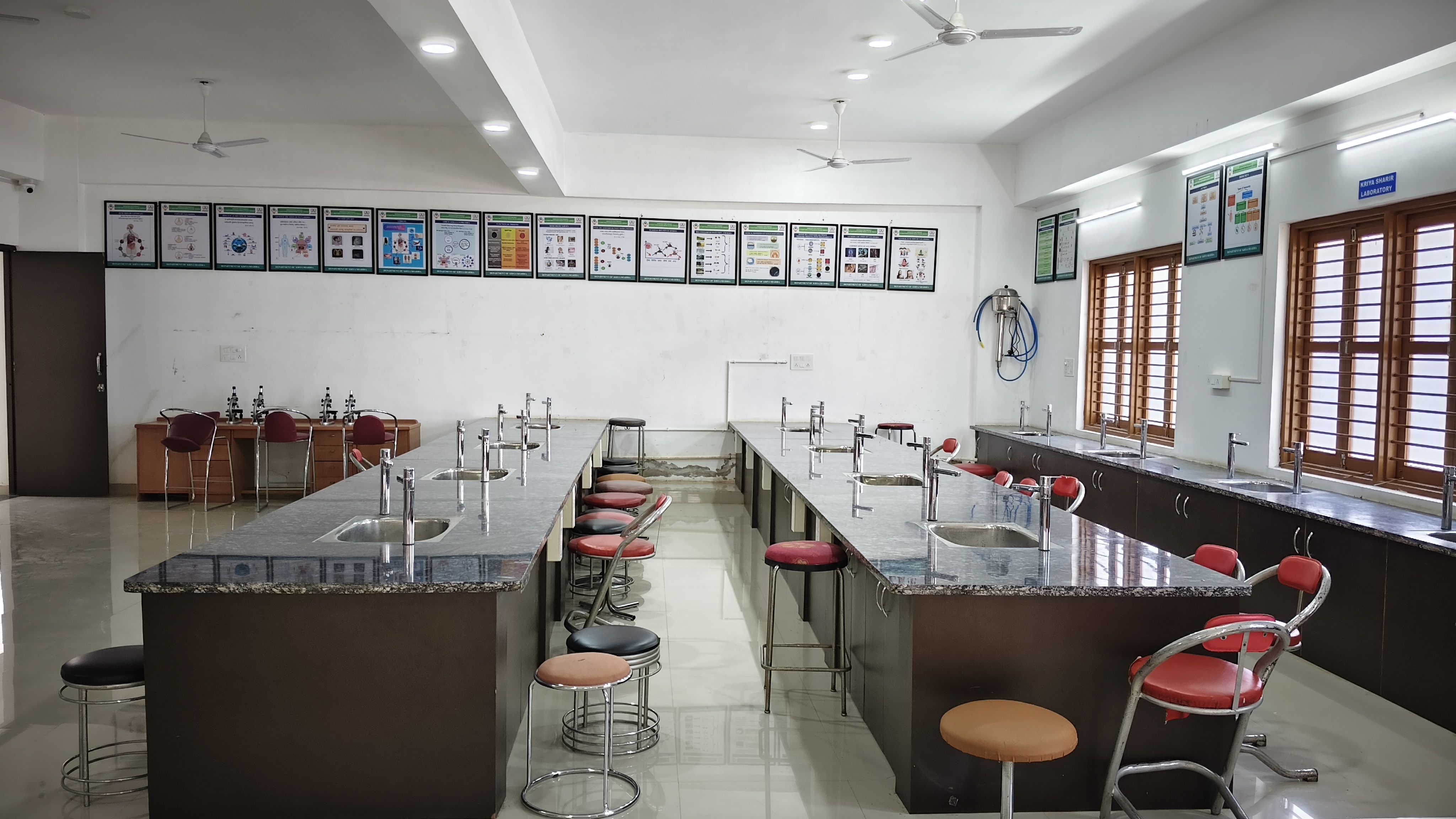
Well-equipped Kriya Sharir Practical Laboratory
Modern physiology instruments and hematology setup
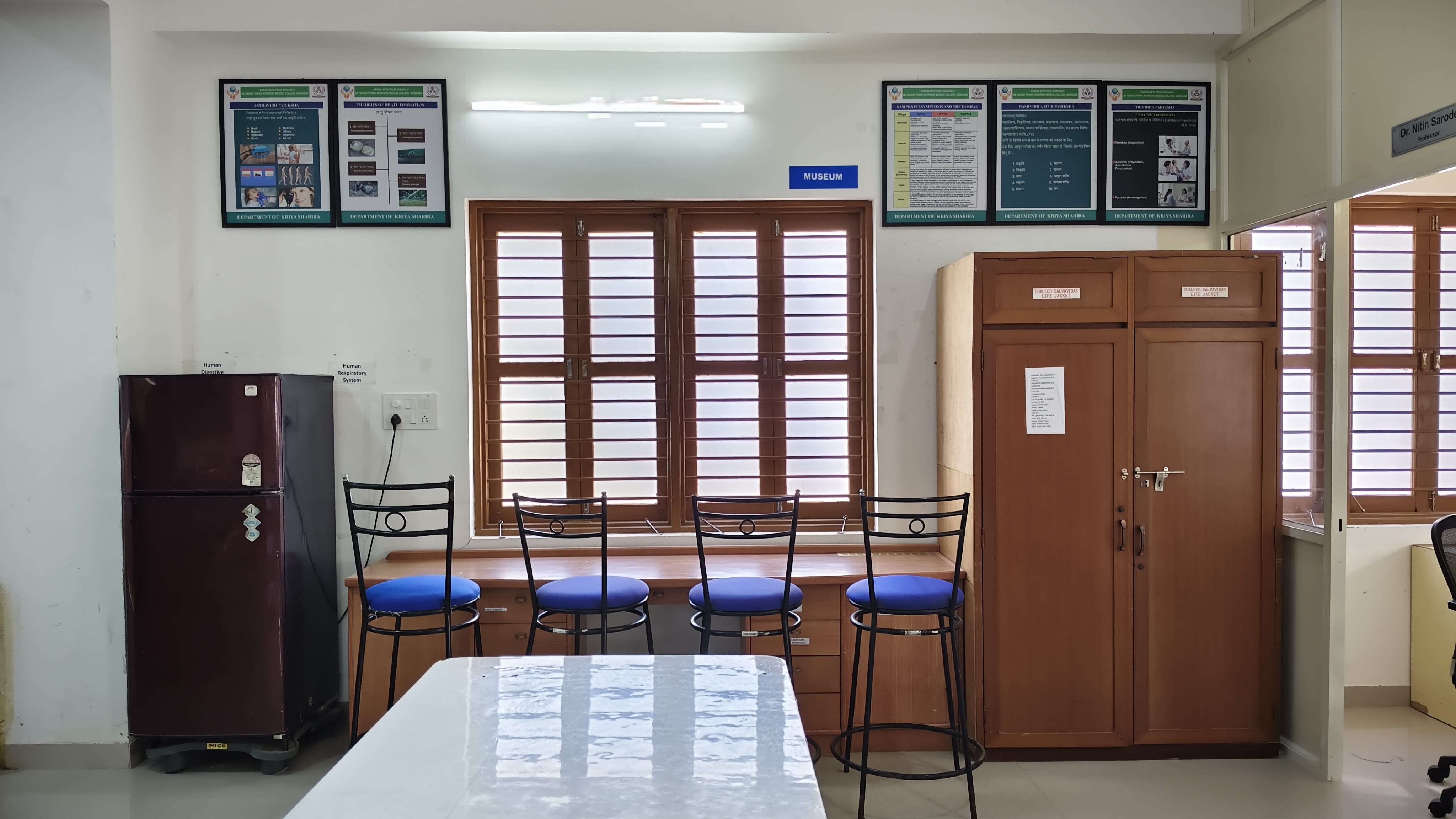
Charts, anatomical models, and teaching aids
Audio-visual teaching facilities
Reference books, journals, and digital learning resources
Infrastructure developed as per NCISM norms
Theory lectures and practical demonstrations
Student seminars and journal presentations
Tutorials and revision sessions
Internal assessments and viva voce
Workshops and academic discussions
University examination preparation
Upon completion of the course, students will be able to:
Understand normal human physiology from the Ayurvedic perspective.
Correlate Ayurvedic physiological principles with modern physiology.
Apply physiological concepts in clinical diagnosis and patient management.
Develop analytical, observational, and clinical reasoning skills.
Build a strong academic foundation for higher professional subjects.
Knowledge of Kriya Sharir forms the cornerstone of Ayurvedic clinical practice, higher education, research, preventive healthcare, and integrative medicine. It equips students with the scientific understanding required for successful careers in clinical practice, academics, public health, and research.
Experienced and dedicated faculty
NCISM-compliant practical laboratory
Integrated teaching with modern physiology
Interactive learning through seminars and demonstrations
Clinical orientation from the first professional year
Research-focused academic environment